Join the Gradeo waitlist today.

Opponents of pen-and-paper standardised assessment have been making their case for decades. It has stayed in place because, so far, it remains the fairest and most efficient way to assess students at scale. That does not make it fixed. It arrived in stages, each one a response to a constraint, and it has never stopped moving.
Understanding that sequence puts the current digital transition in context, and gives a better guess at what follows it.

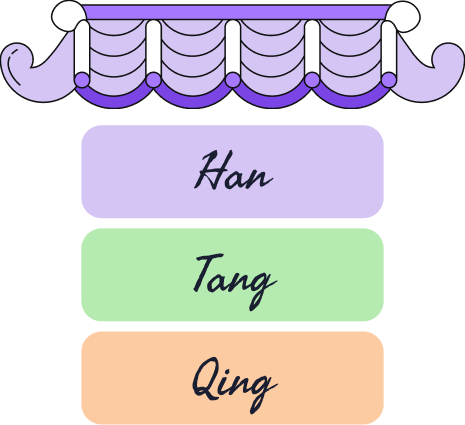
From Han dynasty prototypes through the Tang and into the Qing, China built a sophisticated system for selecting officials across an enormous empire. Its job was to filter thousands of candidates consistently, and it introduced features every exam hall still uses.
Candidates were locked into small cells for up to three days. Scripts were recopied by clerks so that handwriting could not identify the writer. At the highest levels, pass rates often sat below one percent. Standardisation, anonymity and scalability were all here first.


[[ sealedNote ]]

Degrees were awarded through oral disputations. Students defended propositions in public while masters tried to dismantle their reasoning. Sessions could run for hours or days. The assessment was elite, intellectual and adversarial.
Two pressures ended it. Universities grew through the eighteenth and nineteenth centuries and speech could not be scaled to the numbers arriving. At the same time mathematics and the sciences became far harder to examine aloud, because the evidence of competence was the written working itself. Centralised marking of written scripts answered both problems at once.
Try it: sit a disputation
In the mid nineteenth century Britain formalised competitive written examination for entry to the civil service, following the Northcote and Trevelyan reforms. The aim was to curb patronage and establish appointment on merit. Written, anonymous, standardised papers were the mechanism chosen to do it.
The Cambridge and Oxford local examinations spread across Britain and then across the empire. Australian colonial education systems took on the same architecture: timed written papers, centralised marking, competitive ranking. What began as an administrative instrument became part of the culture of schooling.


[[ normText ]]
[[ bandText ]]
Same script, same number, two different questions. Selection needs a defensible order of merit. Teaching needs a description of achievement. Most systems report both, which is why students receive a band and a rank in the same season.
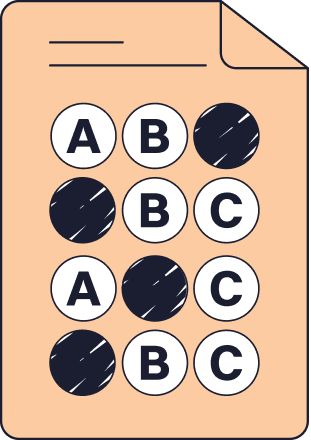
Enrolments in the United States expanded dramatically in the early twentieth century and efficiency became critical. Frederick J. Kelly developed the multiple-choice format in 1914, and during the First World War the Army Alpha tests applied it at enormous scale. Optical mark recognition followed, and millions of scripts could then be processed by machine.
The appeal was objective scoring, rapid marking, statistical comparability and less variation between examiners. There were pedagogical arguments too, but the driver was computation and scale. Psychometrics, reliability analysis and large scale standardisation became central to how assessment was designed.
 Frederick J. Kelly, who wrote the first multiple-choice test in 1914 and later argued the format was being asked to carry more than it could.

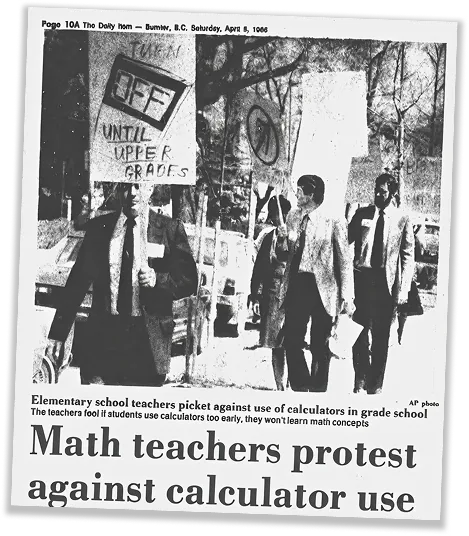
For much of the twentieth century electronic devices were barred from the exam room while slide rules and log tables were allowed. When calculators reached students in the 1970s, the concern was that they would hollow out mathematical understanding.
Exam boards eventually resolved it by redefining what was being assessed, moving the emphasis from arithmetic execution to problem solving and reasoning. What had counted as unfair assistance became ordinary equipment. Format adapted to the technology rather than resisting it indefinitely.
[[ toolVerdict ]]

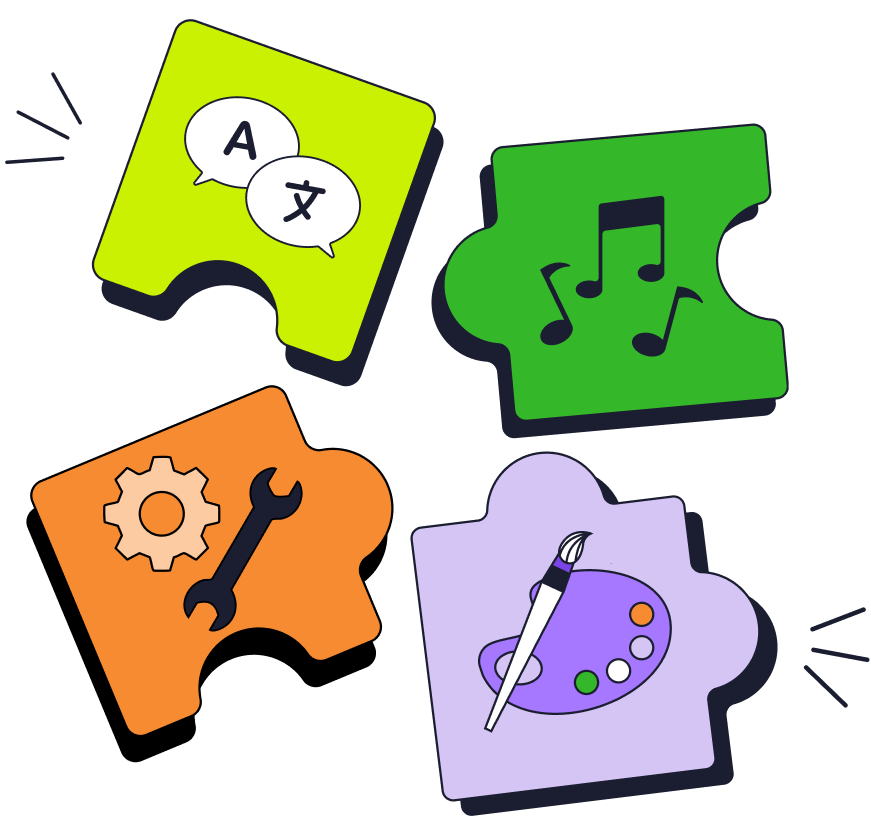
Even at its most standardised, the written paper has never contained every subject. Language courses need listening and speaking. Music and drama need performance. Art relies on a portfolio. Vocational training includes practical demonstration. Coding assessment increasingly needs a solution that runs, not pseudocode written by hand.
The written script was efficient for some disciplines and a poor fit for others. As subjects evolve, the pressure on format grows with them.



School closures forced systems to certify students without the examination that normally does it. Three responses appeared, often in the same country.
In England the model that adjusted school level results was withdrawn within days, once families saw individual outcomes. An exam is a measurement and also a public agreement about how the measurement was reached. Remove the agreement and the number stops carrying weight, however defensible the statistics behind it.
None of that touches the larger cost. Extended closures interrupted teaching at the point where a great deal of it compounds. Attendance, engagement and motivation fell, and the effects were heaviest for students who already had the least support at home. Assessment did not cause that damage, but it is how systems found out where it landed, and it is why reliable measurement of progress matters more now, not less.
The same period normalised assessment on screens at home. That is where today's pressure on take home tasks comes from.

More than one hundred jurisdictions are somewhere in the move from pen and paper to digital delivery. Framed on its own the shift looks radical. Set against the sequence on this page it looks familiar, because every previous structural change followed a constraint.

[[ pickVerdict ]]
Imperial China supplied standardisation, anonymity and security. Nineteenth century Britain supplied the external board and appointment on merit. Early twentieth century America supplied psychometrics and machine scoring. Each was built to solve a stated problem.
Those problems have not gone away. What has changed is the tools, the subjects and the environments students learn in. If the sequence tells us anything, it is that exam systems rarely stay still once the constraints move, and that understanding the lineage does not decide what exams should become next.

Dates follow the conventional account: Han dynasty prototypes through Tang and Qing civil service examination, the medieval disputation, the Northcote and Trevelyan reforms of the 1850s, the Oxford and Cambridge local examinations from 1858, Kelly's multiple-choice item in 1914, the Army Alpha tests of the First World War, calculator admission through the 1970s and 1980s, and the first New South Wales Higher School Certificate in 1967.


Book a demo to see how Gradeo can help create, deliver, mark and analyse assessments in one secure platform.